
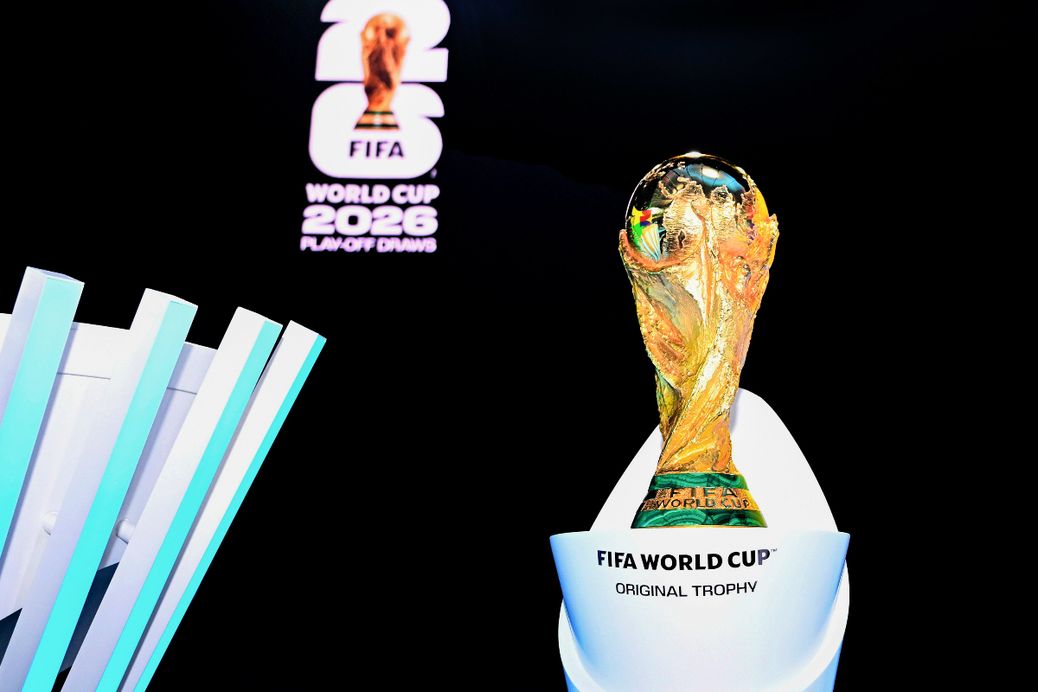
The 2026 World Cup is unlike any that has come before. 48 teams, 104 matches, a brand-new round of 32, and a tournament split across three host nations, the United States, Mexico and Canada.
For bettors, the expanded format creates more opportunity and more complexity in equal measure. Here is how to navigate it smartly, with the historical record as your guide – don't forget to also check out our list of the best World Cup betting apps.
World Cup 2026: The format change that changes everything
The old World Cup asked 32 teams to survive eight groups of four, with the top two advancing directly to a Round of 16. The 2026 version runs 12 groups of four, with the top two from each group and the eight best third-placed teams advancing to a new Round of 32.
That is 32 teams still in the competition before the knockout rounds truly begin meaning title favourites must win one additional high-pressure match before reaching the quarter-finals.
The practical betting implications are significant. Group winner markets offer lower value than before. Coming second or third in a group still provides a realistic knockout route, which makes the differential between first and second in betting terms much smaller.
Instead, focus on “to qualify” markets backing a strong team to simply advance rather than top their group, often at comparable odds and considerably lower risk.
The third-place safety net also creates a specific in-play angle. Teams already through after two group games will likely rotate their squads in the final group match. A fully motivated minnow versus a rotated Spain or France is a significant in-play opportunity. Monitor the team news obsessively on those final group-match days to potentially pick up some attractive odds.
World Cup 2026: The historical pattern the market is ignoring
Here is the single most important fact for anyone betting the outright winner market. No European nation has ever won a World Cup held in the Americas with one exception. In nine tournaments played on the American continent, South American sides have won eight of them.
Germany broke the pattern in 2014, but they did so by beating the hosts 7–1 in the semi-finals in Brazil. Every other Americas-hosted tournament has gone to a South American nation: Uruguay twice, Brazil five times, Argentina twice.
The betting market has almost entirely ignored this. European teams, Spain, France, England and Germany collectively hold around 55–60% of the implied win probability across bookmakers. Argentina sit at 8/1 and Brazil at 9/1 despite the historical tailwind being as strong as it has ever been. If the pattern holds, backing South American sides to win the tournament represents the clearest historical value bet in the market.
World Cup 2026 Tournament Winner: Best Bet and Best Outsider
The Team To Oppose: Spain (4/1) – Still at 4/1
Spain deserve respect as one of the strongest squads in the tournament.
Their qualification campaign was excellent, they conceded only two goals and possess depth few nations can match. If the World Cup were being played in Europe, Spain would have a convincing case as outright favourites.
The issue is price. The model gives Spain an 11.5% chance of winning the tournament, significantly lower than the probability implied by their outright odds. They remain one of the leading contenders but appear shorter than their true chances suggest.
Their route through the tournament also looks more demanding than some of their rivals. Uruguay are capable of causing problems in Group H and the projected bracket path creates the possibility of meeting Argentina relatively early in the knockout rounds.
Spain are undoubtedly a strong team. The question is whether they should be favourites in a tournament where the historical conditions point so strongly towards South American success.
Among the leading contenders, they appear the most vulnerable from a betting perspective.
Best bet: Argentina (8/1) – Now best price of 9/2
Argentina emerge as the strongest outright selection when the model output, qualifying performance and historical trends are combined.
The defending champions have landed in arguably the most favourable group of any top seed, facing Algeria, Austria and Jordan in Group J. The draw significantly increases their chances of reaching the knockout rounds with minimal resistance and reduces the likelihood of encountering another heavyweight before the latter stages.
The simulation model gives Argentina a 25.8% probability of reaching the final and a tournament leading 15.4% chance of lifting the trophy. Once the geographical adjustment is applied, no nation rates higher.
Their qualifying campaign provides further support. Argentina finished top of the CONMEBOL standings by 14 points with a goal difference of +21, producing comfortably the strongest qualification performance of any South American nation.
The core of the squad that won the World Cup in Qatar remains intact and arrives with proven tournament experience. Combined with the historical success enjoyed by South American nations in Americas hosted World Cups, the overall profile is extremely strong.
The obvious concern is the difficulty of retaining the trophy. Only Italy in 1938 have successfully defended the World Cup. The holders have failed in 20 of the previous 21 attempts. Even with that caveat, Argentina possess the strongest overall combination of draw, form, model support and historical alignment in the field.
Outsider: Norway (28/1) -Best price of 16/1
Norway produced the most dominant qualifying campaign in European football.
They won all eight matches, scored 37 goals and conceded only five. No European nation scored more goals during qualification, while Erling Haaland finished with 16 goals.
The presence of Haaland alone gives Norway a higher ceiling than most outsiders. Tournament football is often decided by moments of individual brilliance and few players are better equipped to provide them.
Their group is challenging. France are deserved favourites to top Group I and Senegal offer another dangerous opponent. The model projects Norway to finish second behind France but still progress comfortably.
The projected knockout route is where things become particularly interesting. Norway are forecast to face Scotland in the Round of 32 before a likely meeting with Brazil or Japan in the last 16. Beyond that point the bracket becomes considerably more open.
The model gives Norway a 16.2% probability of reaching the final, a figure that compares favourably with several nations trading at significantly shorter odds. Outsiders rarely win the World Cup, but they frequently reach the latter stages. Norway appear better positioned than most.
The Host Nation Angle: USA (40/1) – OUT
Host nations have historically enjoyed a meaningful advantage.
Six previous World Cups have been won by the host country and several others have produced deep runs from teams benefiting from home support, familiar conditions and reduced travel demands.
The United States enter the tournament with all of those advantages. Paraguay, Australia and Turkey make up Group D, a section the model projects the Americans to win. Doing so would likely produce a favourable Round of 32 fixture against one of the third placed qualifiers.
The geographical adjustment also works heavily in their favour. As co hosts in an Americas based tournament, the United States receive both the host nation boost and the continental adjustment applied within the model.
They are not projected as realistic favourites, but their chances appear stronger than the market suggests. At 40/1, they represent one of the more appealing each way options among the longer priced teams.
The Neutral Ground Wildcard: Morocco (50/1) – OUT
Morocco continue to fly under the radar despite producing one of the strongest qualification campaigns in the competition.
They won all eight matches, scored 22 goals and conceded only two. Goalkeeper Yassine Bounou completed qualification without conceding a single goal. Unlike South American and European nations, Morocco receive no geographical adjustment. Their projections are driven almost entirely by qualification performance and tournament strength.
That makes their numbers particularly noteworthy. The model projects Morocco to finish second behind Brazil in Group C, creating a potentially favourable knockout path. A Round of 32 meeting with Japan would likely be followed by a last 16 clash against Ecuador or Norway.
Their run to the semi finals in Qatar demonstrated their ability to compete with elite opposition over a tournament environment. That experience should not be underestimated.
The model gives Morocco a 5.0% probability of reaching the final, substantially higher than current market expectations. Among the bigger priced teams, few appear more underestimated.
World Cup 2026 Golden Boot: Best Bet and Best Outsider
The historical Golden Boot record contains a pattern that most bettors do not know is only three of 22 Golden Boot winners also lifted the trophy. The most common outcome for a Boot winner's team is third place in nine of 22 tournaments, or 41% of the time.
And no player who scored nine goals or more has ever been on the winning team. Just Fontaine scored 13 in 1958 as France finished third. Sandor Kocsis scored 11 in 1954 with Hungary losing in the final. These are not coincidences; they reflect teams that attack relentlessly but cannot keep clean sheets when it matters.
Best bet: Lautaro Martinez at 22/1. Zero goals going into their quarter final match – Best odds 100/1
He plays for the defending champions in the softest top-seed group, on the continent where South American strikers have won the Boot before.
The two times a Boot winner and trophy winner were the same person have been Mario Kempes in 1978 and Ronaldo in 2002, both featured a dominant team with an easy early draw producing a prolific primary striker. Argentina 2026 matches that blueprint more closely than any other side in the tournament.
Outsider: Jonathan David at 33/1. Three goals – Canada now knocked out
Canada's striker was one of Europe's leading scorers in club football in 2024/25. Canada are a host nation in Group B (Switzerland, Bosnia, Qatar) and have the second-softest group after Argentina's.
The historical precedent is exact. James Rodriguez in 2014 was an unfancied striker on an unfancied nation, in a group nobody expected him to dominate, who scored six goals and won the Boot at long pre-tournament odds. Nobody is talking about David for the Golden Boot. That is precisely where value is found.
World Cup 2026: Five Betting Strategies to Apply Across All Markets
Back “to qualify” not “to win the group.” The third-place safety net makes group qualification a significantly safer bet than group victory, often at a small odds discount. For strong teams in difficult groups, this is the smarter expression of the same view.
Use each-way bets for deep outsiders. With an extra knockout round, a team that reaches the quarterfinals or semi-finals now plays one more match than before which gives each-way positions on outsiders more time to land. Norway, Uruguay and Morocco all have realistic paths to the last four.
Separate the Golden Boot from the tournament winner. History says they are almost independent markets. Backing the same player for both is a low-probability bet, so back them in the Boot market and then find a different team for the outright.
Shop lines across bookmakers. The odds variation in the Golden Boot market is extreme: Phil Foden is available at 40/1 at some books and 250/1 at others. Jude Bellingham from 33/1 to 200/1. Always check multiple books before placing anything beyond the headline markets.
Set a budget before the tournament starts and flat-stake throughout. Thirty-nine days, 104 matches so the volume is unprecedented. The most common way recreational bettors lose money across a long tournament is not from bad picks but from inconsistent staking after early losses or winning streaks. Decide your total budget now, set a per-bet stake of 2–5% of that figure, and do not deviate.
Conclusion
The 2026 World Cup is the most complex betting landscape in the tournament's history. The format favours outsiders, whilst the historical record favours South America, and the Golden Boot market is full of mispricing’s for those who know where to look. Bet with discipline, seek value over names, and let history be your guide.
Model explanation:
The model converts each team's best available outright odds into an implied probability of winning the World Cup. That figure is then blended with a qualifying performance rating, with the market contributing 80% and qualifying form 20%.
Qualifying form is based on points per game in the final qualifying round and is weighted by confederation strength, meaning results in stronger regions carry greater value. Teams that qualified through an intercontinental playoff receive a small downgrade.
A geography adjustment is then applied. South American nations receive a 10% boost based on their historical World Cup performance, while hosts USA, Canada and Mexico receive an additional 5%. European teams receive a 5% reduction.
These ratings are applied to the official 2026 World Cup bracket and the tournament is simulated 100,000 times. The percentages quoted throughout this guide reflect how often each outcome occurred across those simulations.

The Betting Desk is run by Neil Potter. Neil built and refined all of the site’s data models, helping it grow into a trusted source of analysis across the Premier League, EFL and major tournaments. His models track key metrics, long term trends and areas where market prices move away from underlying performance.

































 GambleAware